As we dive head first into a recession, businesses are learning to become leaner, more agile, and more savvy in their next strategic move. That means identifying the most profitable opportunities, and making quicker, data-led decisions – whether seeking new areas of investment, strategic partnerships or in their business development efforts.
In our recent blog on how your business can win in a recession, we highlighted the importance of focussing outreach on companies who have been potentially positively impacted by the pandemic. By targeting these companies, you can prioritise leads who are better resourced and in a better financial state, saving you time and putting you in a stronger position to negotiate a more profitable deal.
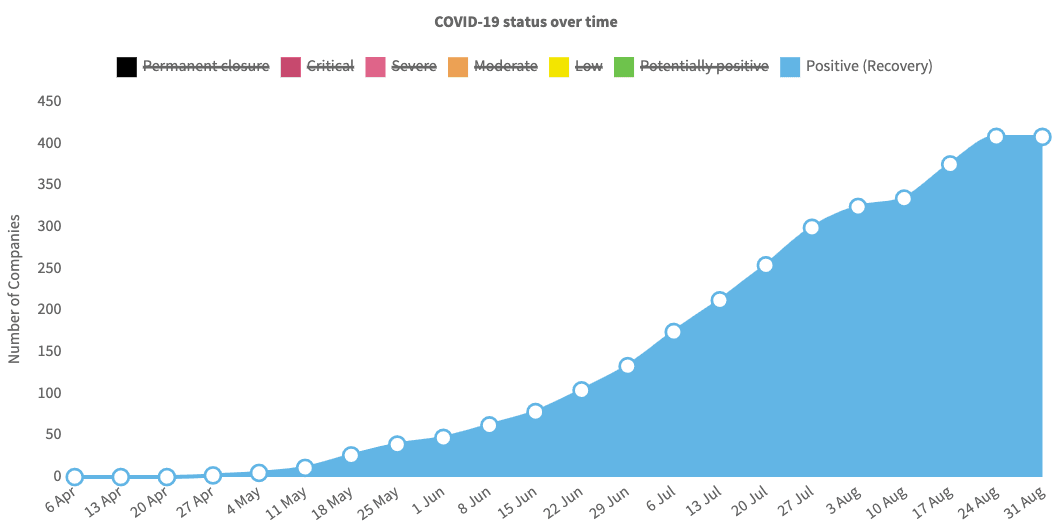
The UK has been weathering the COVID-19 storm for over half a year now, so what about the businesses recovering from its impact? Some companies have experienced struggles but come out the other side, which is why we’ve created the Positive (recovery) tag.
Find companies that have bounced back
If a company is showing signs of recovery and their business was previously negatively impacted by the pandemic, they will now be tagged with a ‘Positive (recovery)’ status.
On a case-by-case basis, this is a great tool to use when conducting due diligence on a potential lead or client. The ‘Positive (recovery)’ status shows that a business has pulled through this turbulent period. What’s more, with our regular and timely data reviews, it can also be a great trigger to approach – meaning you can be the first mover, and stay one step ahead of the competition.
Want to see how your portfolio of clients or investments is recovering from the pandemic? Use collections. Once a company has been added to your personalised list, you will be notified as soon as their COVID-19 impact status changes. You’ll also be able to see graphs and statistics for this group of companies, including COVID-19 impact status over time.
The ‘Positive (recovery)’ tag is ultimately a great tool to find companies that are recovering from the pandemic. But what if you want to find out just how severely a company has been affected by COVID-19?