It was recently announced that the UK had officially entered a recession—defined as two consecutive quarters of economic decline—for the first time in 11 years. This came as no surprise, as we’ve all seen first-hand how the coronavirus pandemic has rocked the economy, and permanently changed the ways that businesses operate.
So in such a tumultuous time, how can you ensure that you come out the other side stronger than before?
Back in 2010, a study featured in the Harvard Business Review found that the most successful businesses post recession are the ones that are selective with cost-cutting moves, choosing to improve operational efficiency before making staff cuts, whilst actively developing new markets and investing in assets.
The study notes that these companies ‘judiciously increase spending on R&D and marketing, which may produce only modest benefits during the recession, but adds substantially to sales and profits afterward. The resources freed up by improving operational efficiency finance much of this expenditure.’
Indeed, there’s little point wasting time trying to bring on new business which may soon be going under—your sales figures may get a short term boost, but your retention rates will suffer.
At Beauhurst, we track over 30,000 innovative and ambitious UK companies. Most of these are agile startups or fast-growing scaleups that are drawing on a variety of methods of growth.
These range from equity and debt fundraising, to attending accelerator programmes and spinning out from an academic institution. These are all external validations that the company is high-potential, and the ongoing support that they receive from these organisations make them much more likely to survive the recession.
Our research has shown that these businesses are resistant to the economic downturn. We recently found that despite some notable down rounds in 2020, valuations as a whole have changed little since the outbreak. And whilst the number of dissolutions in the UK are on the rise, just 25 of the UK’s high-growth companies have permanently shut up shop due to the pandemic.
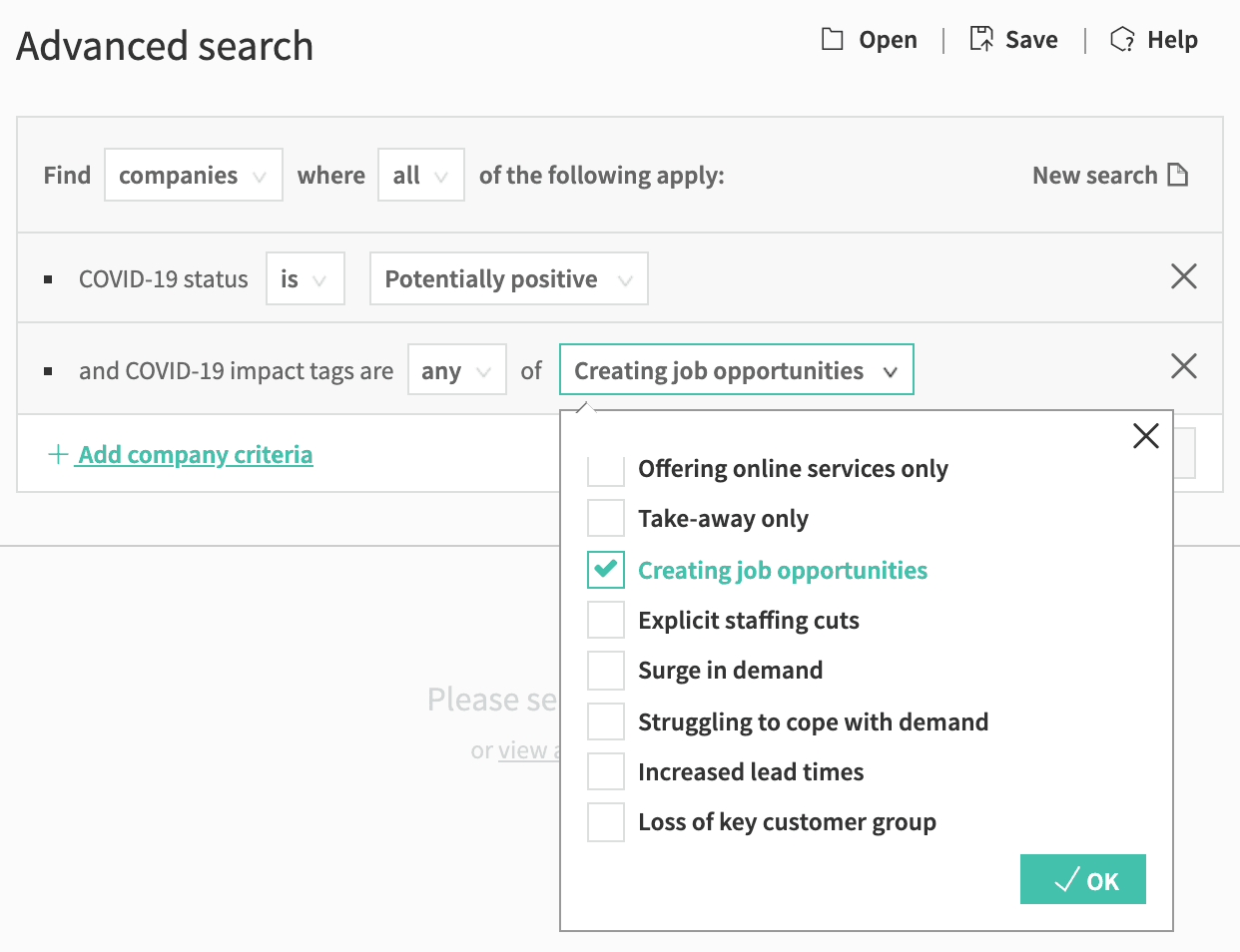
How do we know this? Through thousands of hours manually ascertaining the impact of the pandemic on each individual business that we track. It was no small feat, but this new COVID-19 Impact dataset has become an invaluable, time saving tool for many of our clients. The dataset allows you to quickly zero in on the category of companies you work with, skipping the arduous lead generation process and giving you more time to negotiate and close the deal.
On a broad level, you can explore which sectors have been most positively impacted, and which sectors or niches you should be targeting. No one wants to waste marketing budget on a sector that isn’t going to buy, even if your copywriter is the next Ogilvy.
On a more granular level, you can see the impact on an individual prospect, client or competitor, so you can prioritize the positively impacted businesses (of which there are 5,200) and avoid approaching any that have been severely affected.