
Secret Signals: Unannounced Fundraisings in the UK
How understanding these secret transactions can transform your strategy
Of the thousands of fundraisings completed every year in the UK, more than 60% of these deals go unannounced.
This means that the majority of investment into private companies is not made public. To put this in perspective, 2024 alone saw £3.87b in investment that was not publicly disclosed.
Sophisticated investors, advisors, and business development teams are already using investment intelligence to identify high-growth companies before they enter new phases, spot businesses requiring professional support before it’s sought, and prioritise prospects with fresh budgets to improve sales efficiency.
And in today’s highly competitive market, by the time a deal’s announced to the press, it’s too late — someone else has got there first. When only 40% of transactions are publicly visible, there’s a huge opportunity for those who can spot these secret transactions.
Just because companies aren’t announcing deals publicly, it doesn’t mean you can’t uncover them, and there are strong incentives for doing so. Spotting unannounced fundraisings can provide vital intelligence and offer a head start.
In this article — the first in our series uncovering the ‘Secret Signals’ of the UK market — we’ll cover why the majority of fundraisings go unannounced, why tracking these deals can change the game, and how you can uncover them.
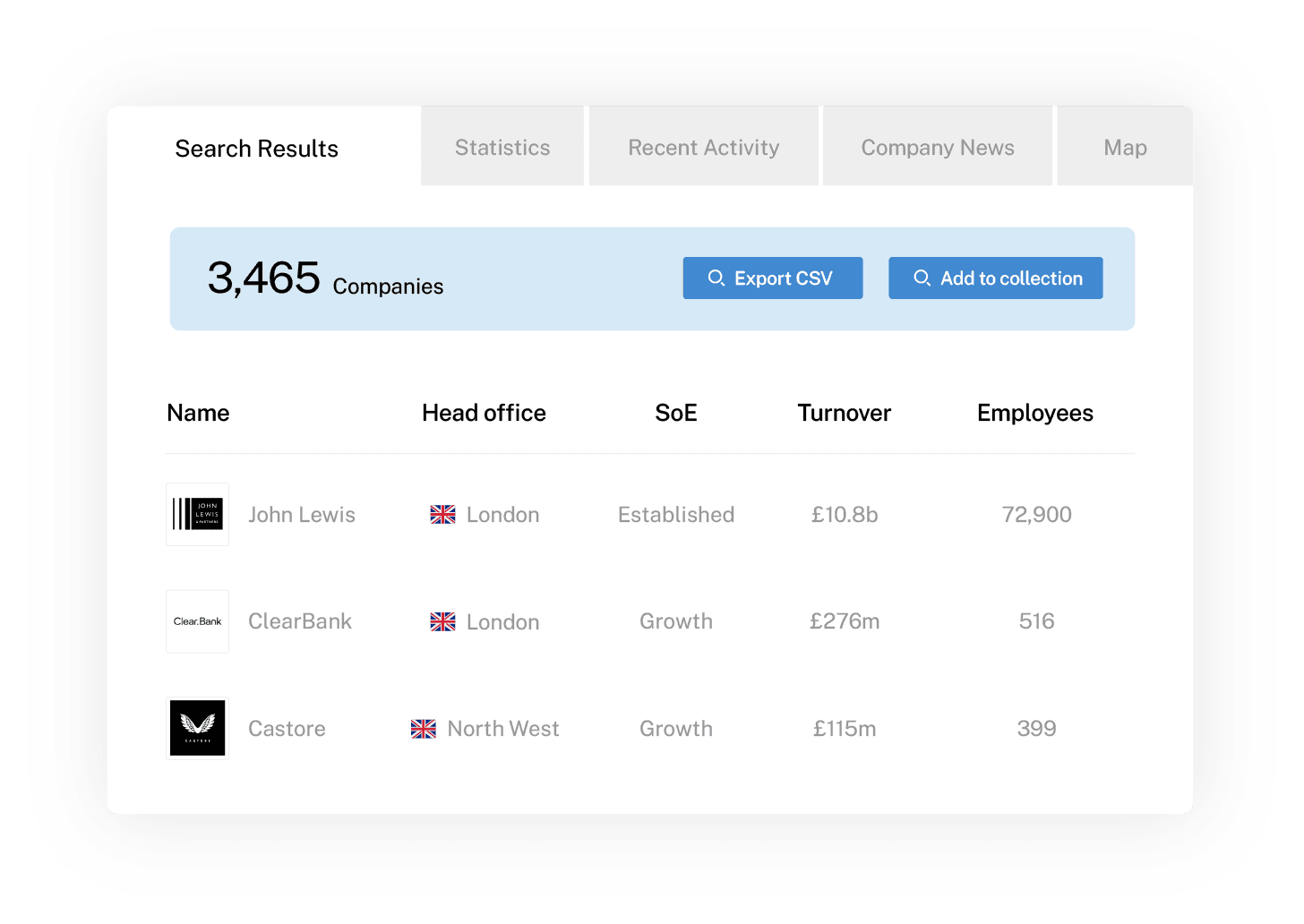
Secret Signals explained
What if you could surface important company milestones before they actually happen?
For example, what if you could detect the precise moment that a company enters its succession planning window? The old approach would require insider knowledge, close reading of media speculation, and a dose of guesswork based on age. Not particularly reliable.
Secret Signals are signifiers of company activity that go beyond individual datasets. Take a series of events, such as a recent diversification of age groups on the board, changes in shareholdings, and the establishment of a holding company, just to name three examples. In isolation, these events don’t tell you much. But combined? They could signal the beginning of succession planning.
So, how does this work in the context of unannounced fundraisings? What are the signs of a deal that isn’t publicly announced, and how do you spot them? Read on to find out.
How to Spot MBO or MBI Opportunities Before Anyone Else
Learn how to spot MBO and MBI opportunities before anyone else in our comprehensive guide.
What is an unannounced fundraising?
When a UK business raises equity investment, it’s legally required to report this deal via share allotment files (SH01s) with Companies House. These spell out the number and value of shares issued in exchange for investment.
The company then has a choice: to announce the deal or not. Many choose to use the investment as a public demarcation of growth, showing the market (and potential future investors) that this is a business with a growth mindset.
However, most businesses choose not to publicly acknowledge fundraising rounds. But why? At first glance, this seems like an opportunity missed — why wouldn’t a company announce that they’re a growing business with a fresh round of investment?
As always, there is nuance here, with a number of possible reasons — ranging from maintaining a competitive advantage to a desire for discretion from certain investors. Let’s explore some of these reasons in greater detail.
Why do some companies not publicly acknowledge deals?
Protecting competitive advantage
Public announcements can reveal growth plans, prospective new markets, or potential new product directions. This can be especially obvious if a fund is known for its track record of investment in similar businesses. Some teams prefer to keep this information on the down-low whilst they’re in the execution phase of these plans.
Managing commercially sensitive information
In IP-rich industries, such as biotech, deeptech, and cyber security, early funding is often linked to confidential R&D or pending intellectual property filings. This is particularly true of spinouts, whose USP is often their intellectual property. Not sharing a raise protects ongoing work.
Investor preferences for discretion
Not all investors want publicity. Family offices, ultra-high-net-worth (UHNW) investors, and certain corporate funds may prefer a quieter approach, so companies are encouraged to align with that preference.
Focusing on operational priorities
Announcing a round requires time, messaging, and coordination. For many founders — particularly in early-stage companies — PR isn’t a priority during a busy period of building.
Avoiding unnecessary external pressure
Publicised raises, especially those on the larger side, can create expectations and hype around hiring, revenue growth, and speed of scaling. Some companies prefer to grow steadily without added scrutiny, putting the investment to use in a quieter way.
Under the Radar: 2024's Unannounced Equity Fundraisings
Ever wondered how many deals went unannounced in 2024? We’ve put together this exclusive look at 2024’s unannounced investments.
Why are unannounced fundraisings such a powerful signal?
A company doesn’t dilute its equity for trivial reasons. Every pound raised is earmarked for a specific initiative designed to take the business to its next milestone. This makes identifying these cash-rich, ambitious companies vital.
Here are some growth indicators that unannounced fundraisings can uncover.
Hiring spikes
An unannounced fundraising can signal further investment in headcount, helping a business scale up to meet demand.
New product development
Work on a new product often involves a fresh injection of capital into R&D or talent to help realise it. An unannounced raise could be a front for innovative new product development.
Geographic expansion
Expanding into a new market also requires investment to help rapidly scale up a team’s presence in another country. By not announcing the deal, a business with already strong turnover and a solid customer base could be seeking to expand.
Advisory needs
Fresh capital typically can indicate a range of advisory needs, including legal teams to update contracts or protect IP, accountants to support financial planning, and corporate finance teams to prepare for potential future raises.
Pre-IPO or acquisition
Unannounced capital could signal a company strengthening its balance sheet for an upcoming acquisition or a pre-IPO push. T
hese investments fund the legal, accounting, and corporate finance talent needed to realise those milestones. Our insights show that of the 12.6k acquired UK companies that are currently active, more than 2k (16%) of them received an unannounced fundraising prior to the acquisition.
Take a tour
Who’s using unannounced fundraisings?
Investors
Investors use unannounced fundraisings to identify companies before they enter a new growth phase. This allows them to find ambitious equity backed companies that are still under the radar, as well as predict who is likely looking to raise their next round in coming months.
Crucially, unannounced fundraisings also give investors a more comprehensive sample for benchmarking and determining valuations, free of the hype that can come with press releases for certain raises. This, in turn, enables them to better evidence their valuation to founders.
Advisors
Professionals in the legal, accounting, and corporate finance spaces use unannounced deals to spot businesses likely to require professional support in the future, before advisory services are actively sought. This enables them to reach out earlier to ambitious high-growth companies and with greater context.
Business development teams
Business development teams are almost always squeezed for time, so they’re inherently inclined to prioritise companies with fresh capital. This is because it means they’re more likely to have a budget available, imminent growth plans, and ambitious goals.
Being able to reach these companies improves conversion rates and sales efficiency — as well as providing business development teams with a competitive advantage over their direct competitors.
Merger and acquisition (M&A) teams
Corporate finance and law teams monitor unannounced fundraisings to identify emerging companies raising capital as a strategic precursor to a future exit.
Tracking these Secret Signals enables M&A professionals to accurately identify and engage companies approaching an acquisition or IPO much earlier than those relying on public headlines.
Real estate and office space providers
New capital is one of the leading indicators that a company is seeking new office space, whether it’s to help expand operations or cope with the increased headcount that’s to come.
By tracking unannounced raises, you can move beyond the lagging lease data that everyone else uses. Instead, you’re identifying companies that actually have the budget to scale their premises — and engage with them before your competitors.
Talent acquisition
For recruiters, unannounced deals are the ultimate secret signal. While your competitors wait for a PR announcement, you can identify companies ahead of a hiring spree, before they hit the job boards. This ensures you have a first-mover advantage.
How ISL Talent Uses Beauhurst For Strategic Recruitment
Learn how the team at ISL Talent uses Beauhurst to monitor interesting companies and ensure they never miss out.
How to uncover unannounced fundraisings yourself
To truly understand the UK investment landscape, you need to look beyond what is officially announced to the press. And as the only data provider offering this comprehensive lens on the UK market, Beauhurst identifies these “hidden” transactions to ensure you never miss a high-growth opportunity.
We use interconnected data to spot when an unannounced deal has happened. We do this with a team of qualified data analysts, over a decade-and-a-half of machine learning experience, and tip-offs from our extensive connections.
The combination of these, along with “Return of Allotment of Shares” forms (SH01), works hand-in-hand with our proprietary detection logic to reveal an unannounced deal as soon as it happens.
Trends in stages of growth
Analysis of Beauhurst data reveals that the majority of unannounced fundraisings (83.5%) go to early-stage companies, with 49.4% raised by Seed-stage companies and 34.1% closed by Venture-stage companies.
Early-stage companies are far more likely to raise funding without making a public announcement because, at this point in their lifecycle, discretion often outweighs the benefits of visibility.
Many of these raises are also practical rather than promotional, often involving existing investors, angels, and SEIS and EIS funding. At this stage of evolution, founders prefer efficiency, execution, and the additional runway over PR. There is also less pressure from early-stage investors to go public, and in some cases, young companies may prefer to remain unannounced to protect strategy before attracting attention.
However, this highlights precisely why tracking unannounced activity is critical to understanding where investment is really flowing.
Finding unannounced fundraisings on Beauhurst
There are three key ways to surface unannounced fundraisings on Beauhurst, all of which involve the Advanced Search tool.
First, you can search for companies that have received at least one unannounced fundraising. This search allows for varying levels of complexity, including specifying the date range of the raise and the amount raised, among other criteria.
You can also layer on any number of company attributes, including their industry, location, stage of growth, and more.
The next method for finding unannounced deals is almost identical to the one above, with one exception: it’s easier. Simply build a company search using Beauhurst AI by stating all of the company and deal dimensions required. Here’s a quick demo on how it works.
The final method is subtly different, but it may be more suitable if you’re analysing the investment landscape.
Instead of searching for companies, you can search directly for the fundraisings instead — with the results surfacing every unannounced deal that meets your criteria, rather than the companies. For example, we use this method when compiling the unannounced deals for The Deal and our quarterly State of UK Investment reports.
Gaining the first-mover advantage
Unannounced fundraisings exert a material influence on the growth economy. By looking beyond the headlines and monitoring the Secret Signals that companies are legally required to leave behind, you can gain a significant competitive edge.
Whether you are looking to deploy capital, provide specialist advisory services, or secure top-tier talent, the ability to see the whole market — not just the publicly disclosed 40% — is what transforms a standard strategy into a winning one.
In a landscape where speed and context are everything, those who can interpret these secret signals move from being reactive to being proactive.
As the only data provider that tracks unannounced fundraisings, Beauhurst gives you the fullest view of the UK investment market. To see the platform in action, take a quick online tour — or fill in the form below to talk to our team.
Discover our data.
Get access to unrivalled data on the companies you need to know about, so you can approach the right leads, at the right time.
Schedule a conversation today to see all of the key features of the Beauhurst platform, as well as the depth and breadth of data available.
We’ll work with you to build a sophisticated search, returning a dynamic list of organisations that match your ideal customer profile.
Beauhurst Privacy Policy