
How to Qualify Corporate Finance Prospects
A stronger qualification process helps corporate finance teams identify the right prospects with greater confidence.
Corporate finance teams rarely have the capacity to pursue every potential business opportunity.
With limited time and highly competitive markets, the real challenge is deciding which opportunities are genuinely worth the effort. Some may appear to be strong prospects but never convert, while others can be missed because the right signals were not recognised early enough.
That’s why figuring out how to qualify corporate finance prospects is such a critical, but often overlooked, discipline.
This guide explores how to build a more structured, data-led approach to identifying the right opportunities and acting on them at the right time.
What does it mean to qualify a corporate finance prospect?
Qualification in corporate finance is about drawing a clear line between companies that are simply interesting and those that are genuinely worth pursuing.
Qualification vs prospecting, where one ends and the other begins
Prospecting is broad by nature. It involves scanning markets, building lists, and identifying companies that could at some point require corporate finance support.
Qualification is more decisive. It asks whether a company is not just relevant, but realistically winnable and appropriately timed.
Many teams invest heavily in prospecting but far less in systematically qualifying what they find. As a result, pipelines often become long lists of potential rather than prioritised opportunities.
Why generic B2B qualification frameworks fall short for corporate finance
Frameworks like BANT or MEDDIC are useful in traditional sales environments, but they don’t fully translate to corporate finance.
That’s because CF advisory work is shaped by factors such as:
- Implicit rather than explicit intent
- Complex, multi-layered decision-making structures
- Timing driven by external or strategic events rather than sales cycles
Why corporate finance firms need a qualification framework
The cost of poor corporate finance prospect qualification doesn’t always show up immediately. Instead, it builds gradually through diluted focus and stretched teams working low-probability mandates.
In practice, this often looks familiar. Partners get drawn into conversations that never progress, junior team members spend hours researching companies that were never the right fit in the first place, and genuinely strong opportunities risk being pushed down the priority list.
The cost of pursuing the wrong mandates
When qualification is inconsistent, effort becomes scattered. Time is invested in too many weak opportunities, reducing the capacity available for high-quality mandates. Over time, this doesn’t just slow teams down; it actively reduces conversion by pulling attention away from the deals that matter.
How qualification improves win rates and team efficiency
A strong qualification framework helps reverse this dynamic. It brings structure and consistency to decision-making, ensuring teams are aligned on what “good” looks like.
Rather than relying on individual judgment or ad hoc assessment, firms can prioritise opportunities based on shared criteria.
This not only improves efficiency but also increases win rates by focusing attention where it is most likely to convert.
Take a tour
The key criteria for qualifying corporate finance prospects
Prospect fit
Fit is usually the starting point. This includes sector alignment, size, geography, and company stage. If a prospect sits outside your natural mandate profile, it’s unlikely to progress, regardless of other strengths.
Financial health
Financial health helps determine whether a transaction is realistically viable. Turnover indicates scale and suitability for your mandate range, while profitability provides insight into stability and resilience. Credit position and balance sheet strength add further context around whether a company is in a position to transact.
Together, these signals help separate companies that are simply active in the market from those that are structurally capable of supporting a corporate finance mandate.
Ownership and corporate structure
Ownership structure often shapes both timing and motivation for a transaction. Founder-led businesses may be driven by succession or exit considerations, while PE-backed companies typically operate within defined investment cycles. Corporate subsidiaries are more likely to be influenced by wider strategic portfolio decisions.
Understanding structure helps clarify why a company might transact — not just whether it will.
Deal readiness signals
Decision-makers and authority
Timing and intent
Timing is rarely explicit in corporate finance, so it must be inferred from signals. Growth surges, strategic shifts, funding rounds, and sector consolidation can all indicate that a company is moving closer to a transaction window. When multiple signals align, intent becomes significantly clearer — and the opportunity more actionable.
How to build a qualification scorecard
Defining your ideal client profile
A qualification scorecard starts by clearly defining what a “good client” looks like for your firm. This is best grounded in historical analysis — looking at the companies where you’ve successfully won mandates and identifying what they have in common.
Over time, this becomes a practical benchmark that helps separate strong-fit prospects from those that are unlikely to convert. You can then build ideal client profiles for corporate finance prospects to use as a guide for the future.
Weighting and scoring criteria
Once the ideal client profile is clear, firms typically introduce a structured scoring approach. Different factors carry different levels of importance depending on your strategy; for example, fit or deal size may be more heavily weighted than ownership structure or timing signals. The goal is to move from subjective judgment to a more consistent way of ranking opportunities across the pipeline.
Setting clear disqualification rules
Embedding the scorecard into your team’s workflow
For a qualification framework to be effective, it needs to be embedded into day-to-day processes rather than treated as a standalone exercise. The most effective firms integrate scoring into CRM systems, pipeline reviews, and research workflows so that qualification becomes part of how decisions are made, not an additional step after the fact.
How to build a qualification scorecard
The biggest constraint in qualification is rarely the framework itself, but the quality and availability of data needed to apply it at scale.
Beauhurst helps firms solve this by providing structured access to company-level intelligence across the UK and Germany. BeauhurstAdvise helps corporate finance teams turn that data into a more consistent qualification workflow.
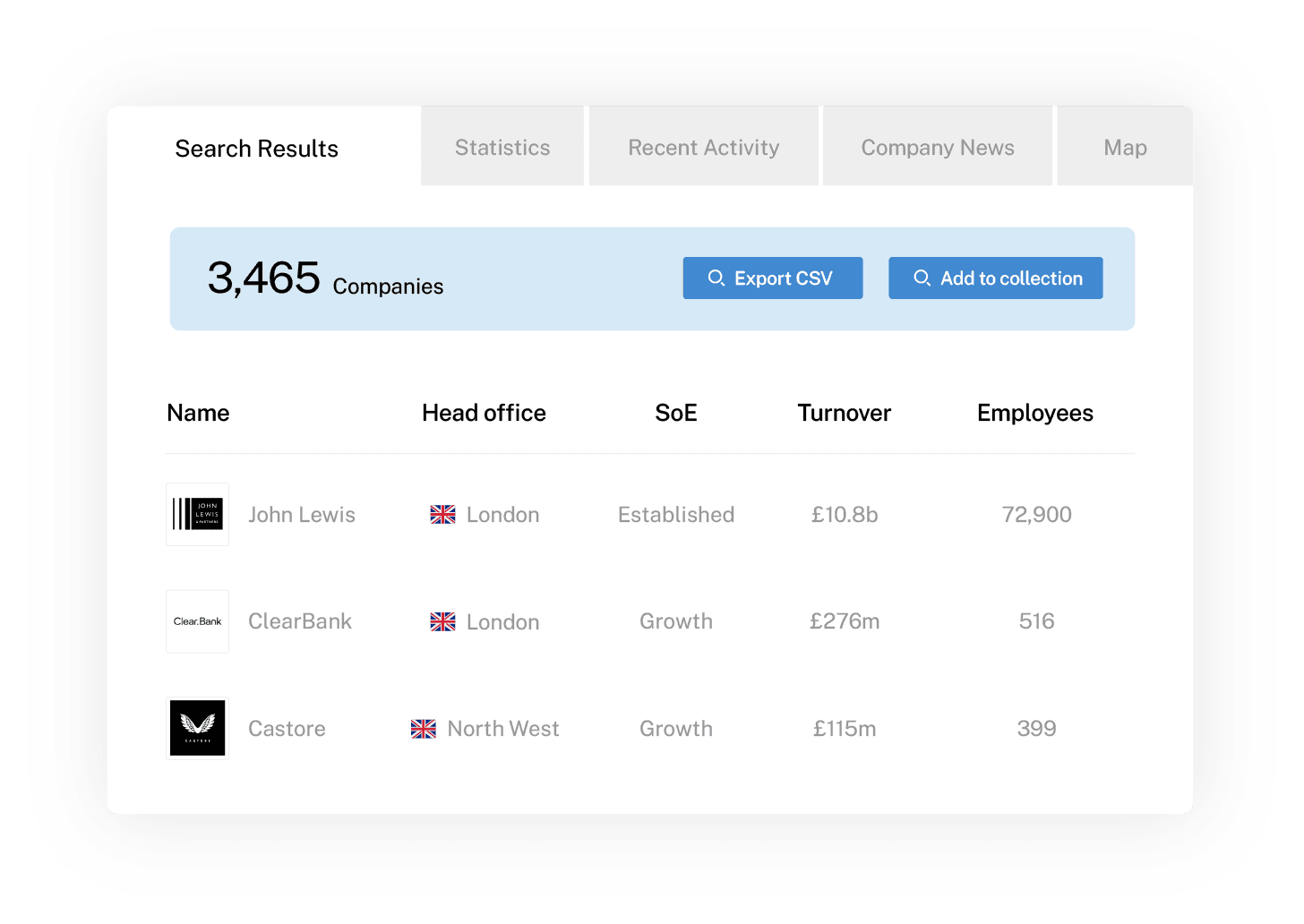
Instead of manual research, advisers can quickly filter companies against their ideal client profile using financials, sectors, ownership structures, growth indicators, and funding history.
It also surfaces real-time deal readiness signals, such as fundraising rounds, acquisitions, and leadership changes, often early indicators of a transaction window.
In practice, firms can:
- Filter UK and German companies against their ICP criteria
- Use financials, signals, and ownership data to score prospects
- Set alerts on trigger events to time outreach
This shifts qualification from a reactive exercise into an ongoing, signal-led process, allowing teams to engage at the right moment, not after it has passed.
How Beauhurst Helps Corporate Finance Teams Win New Clients
Find out how Beauhurst helps corporate finance teams find new clients.
Turning qualification into a competitive advantage
The most successful corporate finance teams are not defined by the size of their pipeline, but by how effectively they focus it.
Qualification is what transforms activity into prioritisation. It reduces wasted effort, improves timing, and ensures advisers are engaging the right companies at the right moment.
When supported by a structured framework and reliable data, it becomes more than a process. It becomes a consistent source of competitive advantage — something reflected in the firms featured in Beauhurst’s Corporate Finance Advisory Power List.
People also ask
By assessing whether a company is a good fit, financially viable, and showing signs of transaction readiness. This typically involves combining sector fit, financial health, ownership context, and behavioural signals such as growth or fundraising activity.
Most advisers prioritise based on a mix of strategic fit, deal size, financial strength, ownership structure, and timing signals. The strongest prospects are those that align closely with the firm’s ideal client profile and show clear indicators of near-term transaction potential.
BANT (Budget, Authority, Need, Timing) is a traditional sales framework, but it only partially applies to corporate finance. While elements like authority and timing are relevant, CF requires deeper context around ownership structure, financial health, and deal-specific triggers.
Readiness is usually inferred rather than stated. Indicators include recent fundraising, acquisitions, leadership changes, or strategic announcements. These signals often suggest a company is entering a period where corporate finance advice becomes relevant.
Common signals include rapid growth, ownership changes, funding activity, restructuring, or increased M&A activity within a sector. These events often suggest strategic decisions are being considered or prepared.
An ICP is built by analysing past successful mandates and identifying shared characteristics such as sector, deal size, geography, ownership type, and financial profile. This becomes the benchmark used to assess and prioritise future prospects.
Decisions are typically based on strategic fit, probability of conversion, resource availability, and expected value of the mandate. The strongest opportunities are those that align with the firm’s expertise and show clear signs of transaction intent.
Prospects can usually be disqualified early if they fall outside core sector or deal size criteria, lack identifiable decision-makers, or show no meaningful signals of transaction intent. Clear rules help prevent time being spent on low-probability opportunities.
See the platform for yourself
Fancy looking at the new industries classifications in action? Fill in the form below to book a meeting directly with one of our team members.