A regional pattern
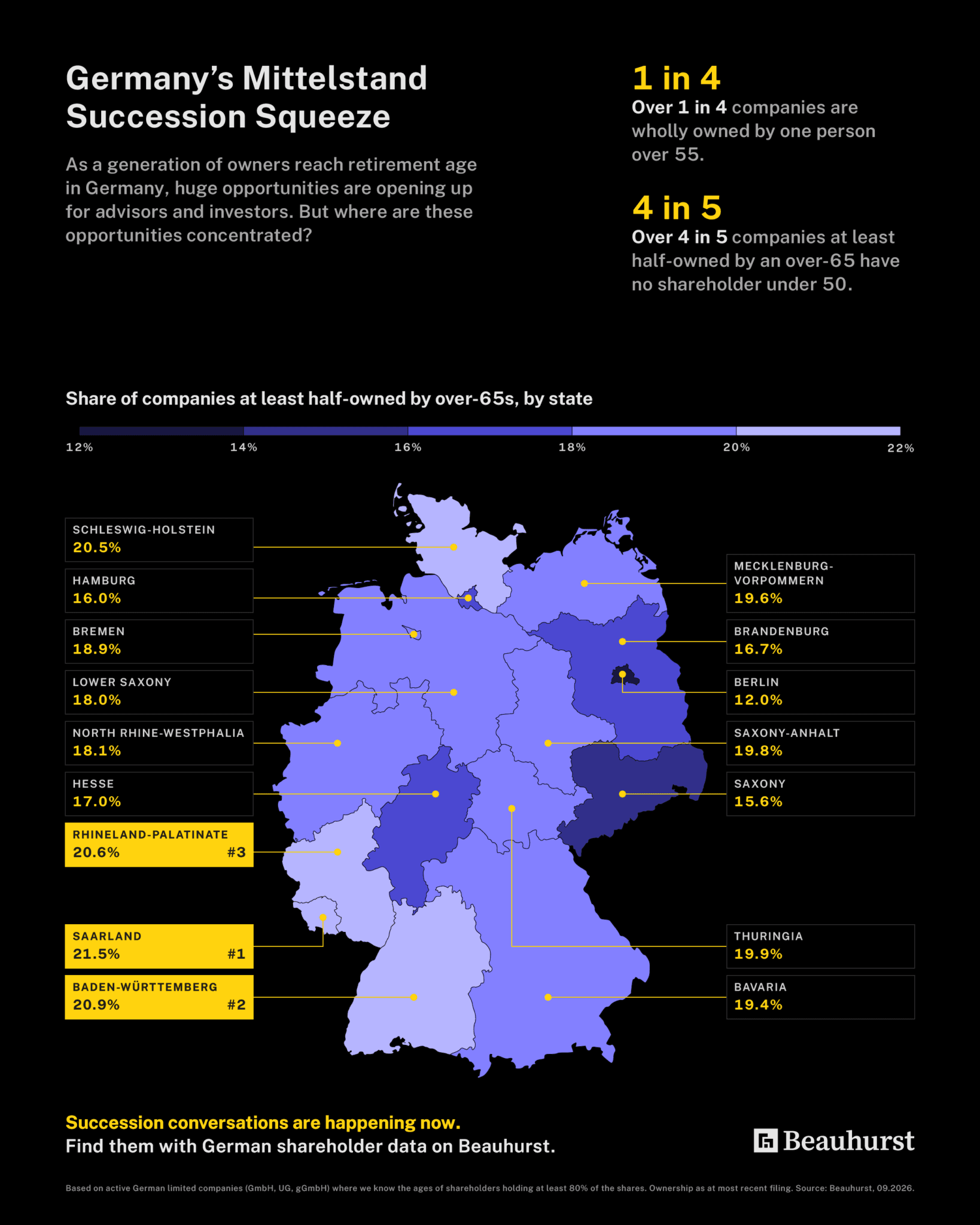
share of limited companies at least half-owned by someone aged 65 or over ranges from 12.0% in Berlin to 21.5% in Saarland, a difference of nearly double.
Berlin’s low share likely reflects the age of its business base. As the centre of Germany’s startup activity, Berlin’s business-owner population is much younger. Its average shareholder age is 48.0, the lowest of any state.
At the opposite end of the scale are Saarland, Baden-Württemberg and Rhineland-Palatinate, with the highest shares of companies at least half-owned by someone aged 65. These regions have long-established, often family-owned industrial businesses, which may help explain why ownership skews older.
The picture in the east is mixed. Thuringia (19.9%), Saxony-Anhalt (19.8%), and Mecklenburg-Vorpommern (19.6%) rank near the top, while Saxony (15.6%) and Brandenburg (16.7%) rank among the lowest.
Ownership often rests with one person
Over 1 in 4 companies are wholly owned by a single person aged over 55. In these businesses, ownership, and with it the decision over what happens next, rests with one individual.
Most have yet to bring in the next generation
Where someone over 65 owns at least half of a company, more than 4 in 5 have no shareholder under 50. Among companies with two or more shareholders, the figure is almost 2 in 3. For most of these businesses, succession has yet to be reflected on the shareholder list.
Some show signs of an ongoing handover. 11.7% of companies majority-owned by someone over 65 now include a younger family member among their shareholders. Notably, two regions with the highest shares of older ownership, Baden-Württemberg and Rhineland-Palatinate, also have the highest rates. It is least common in Berlin and Hamburg.
On Beauhurst, the shareholder timeline shows how a company’s ownership has changed over time, so you can follow a handover as it unfolds. Succession can also show up before it reaches the shareholder list. In Germany, the next generation is often granted Prokura, a broad commercial power of attorney, before receiving shares. With authorised signatory data alongside shareholder data, you can spot these signals beyond the owners themselves.
What this means for advisers and investors
Ownership changes often require specialist support, from valuation and buyer searches to deal structuring, financing, and legal and tax advice. For M&A advisers, corporate finance teams, private equity investors and law firms, knowing where older ownership is concentrated helps show where those conversations may arise.
Timing matters; advisers who build relationships with owners before a decision is made are better placed to help. German shareholder data on Beauhurst shows who owns companies with a filed shareholder list, and how that ownership is structured.